Marble Dust, Lapis, and Gold
Early Production Stages of a Custom Home Altarpiece
I began production of a customized original triptych altarpiece for a family’s home chapel in early 2026. After consulting with the family regarding the style and iconographic program for the altarpiece, we commissioned its construction from a local carpenter according to my design. The carpenter, Mike Paro, crafted the beautiful fixed (non-folding) triptych with an engaged frame.
The second step was to size the triptych with rabbit skin glue to seal and protect it.
Step three was covering the triptych with muslin fabric to allow for flexibility and avoid cracking in the traditional gesso layer that would be be applied on top. The fabric was affixed with more rabbit skin glue.
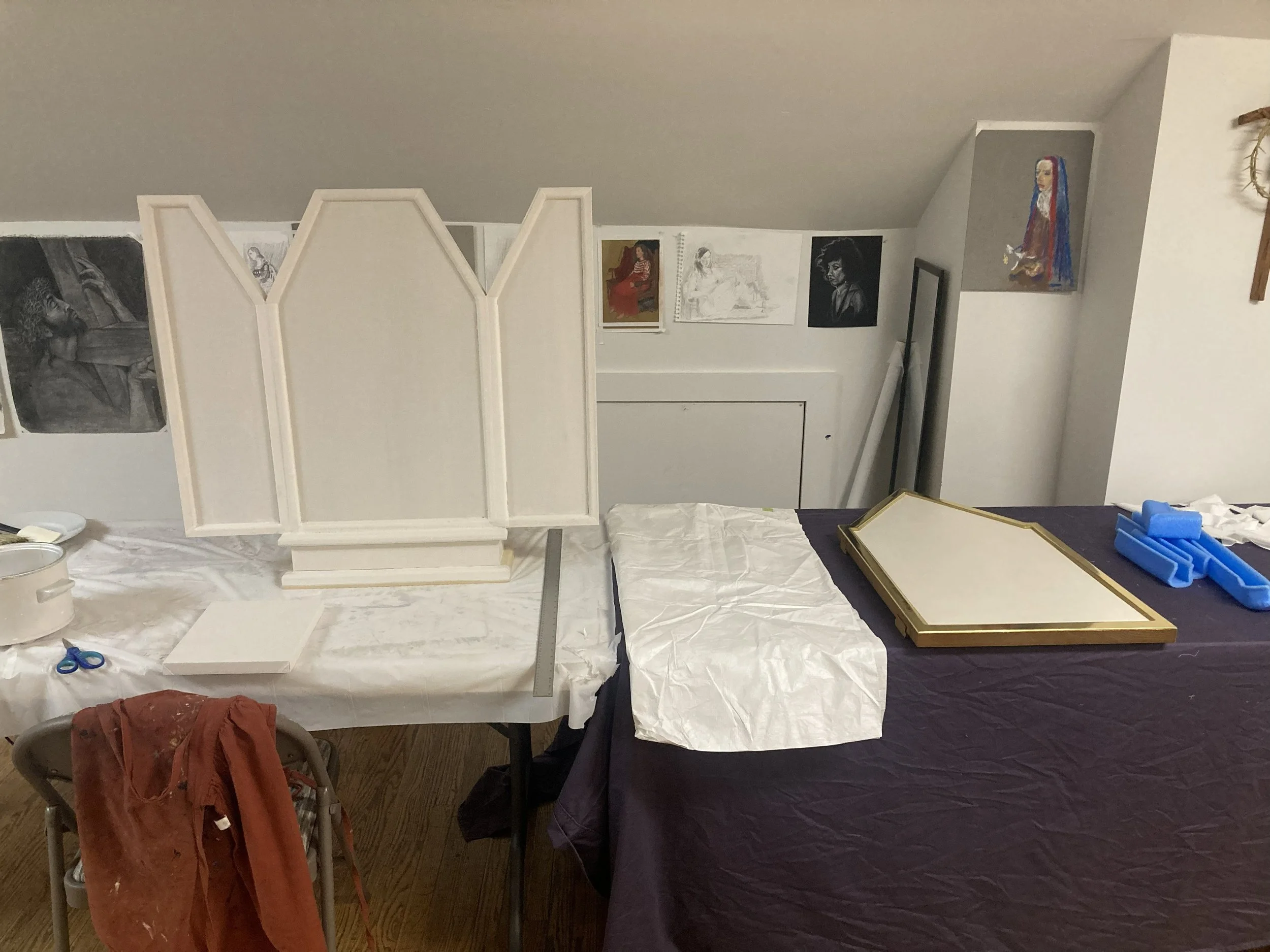
Triptych covered with fabric
The next step was applying innumerable (honestly I lost count) layers of traditional gesso which is comprised of rabbit skin glue, marble dust (calcium carbonate) and some linseed oil to act as a plasticizer. The successive gesso layers were wet sanded until they were as smooth as marble.
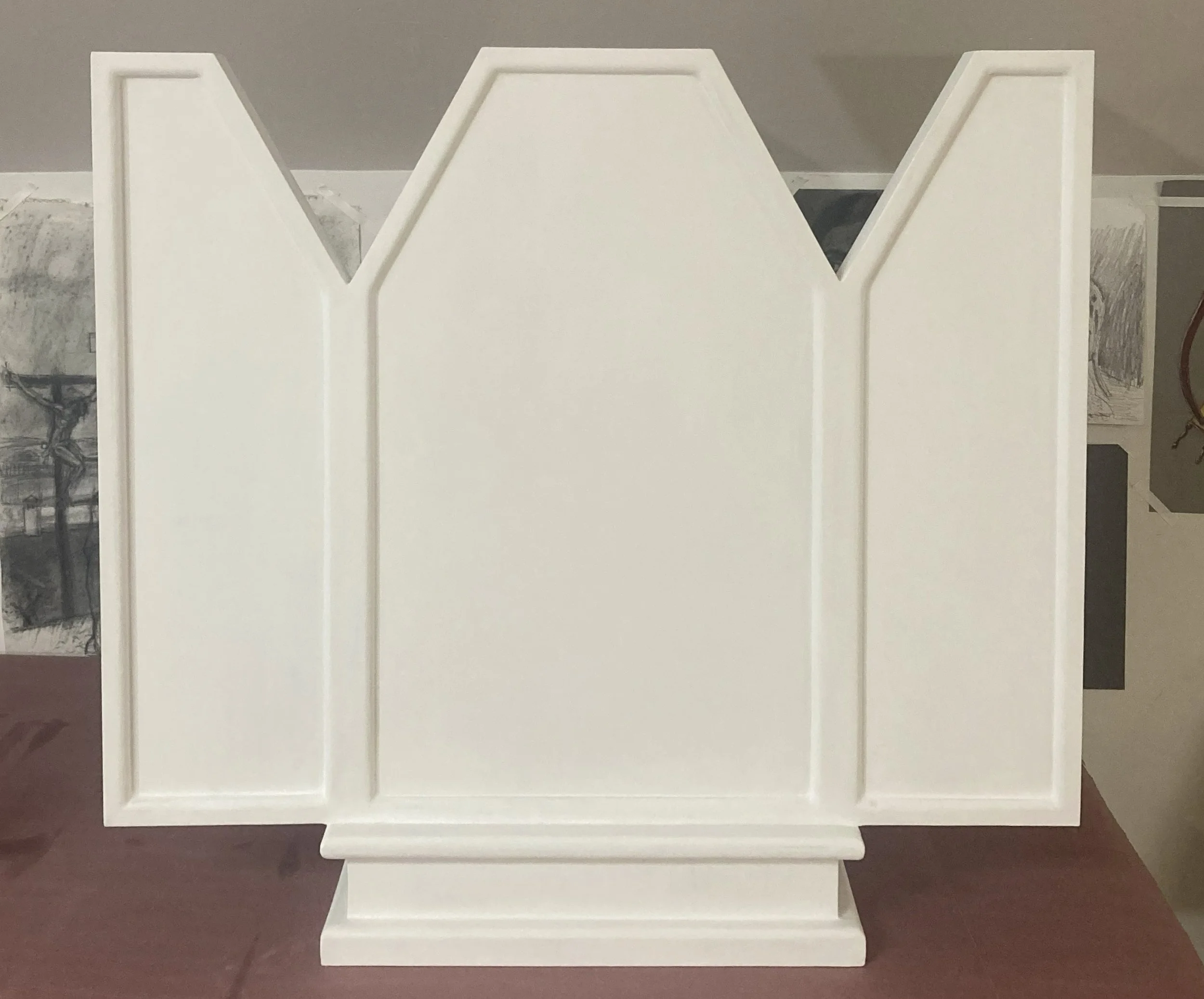
The gessoed triptych
After the gesso is done one can apply bole for water gilding. The most beautiful technique of water gilding which results in a mirror-shine of sumptuous 24k gold was taught to me by the incredible artists at The Art Objects Conservation Lab in Chicago. They taught me the technique on the ‘test’ panel pictured below which will be used for another sacred art project.
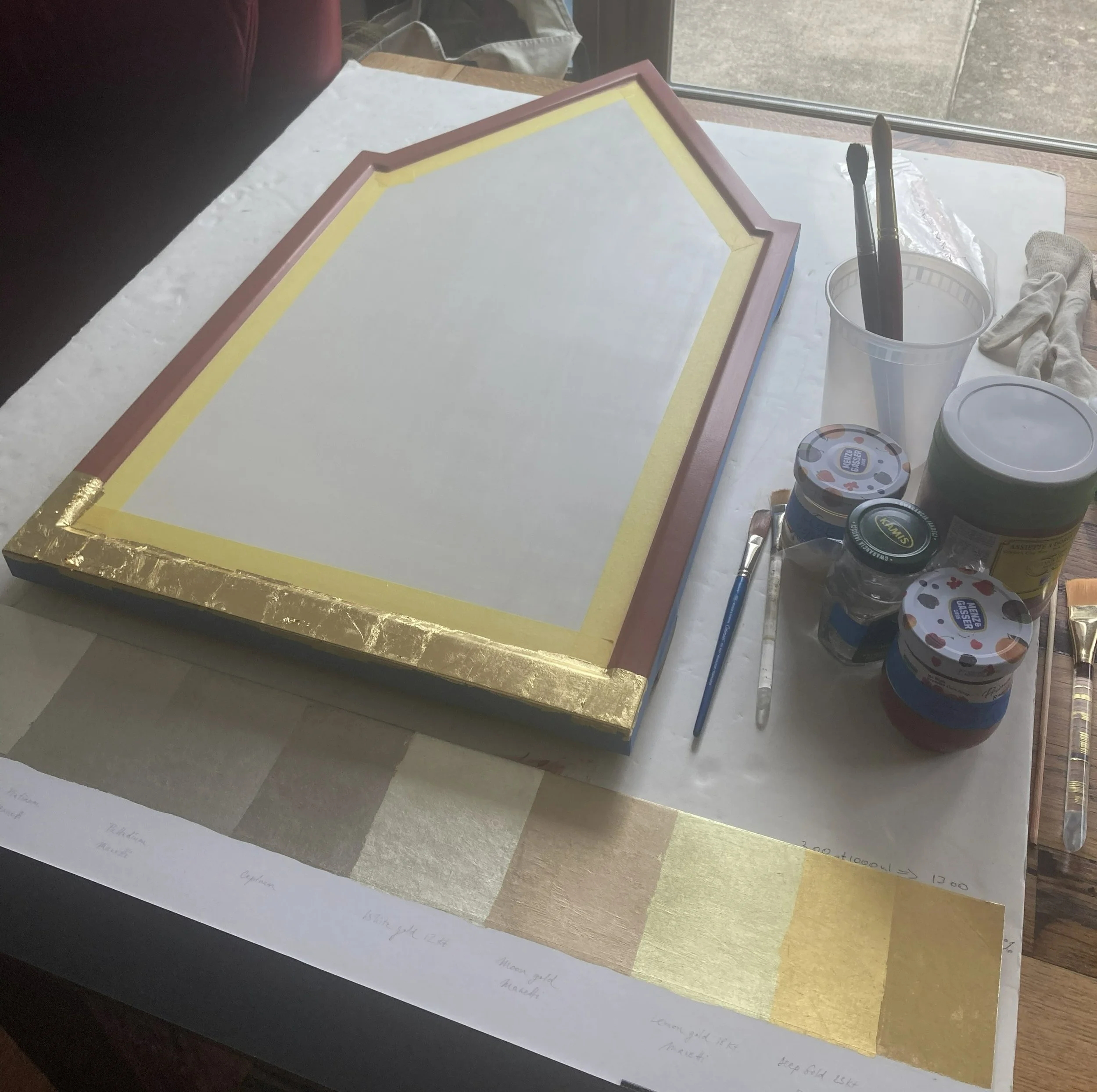
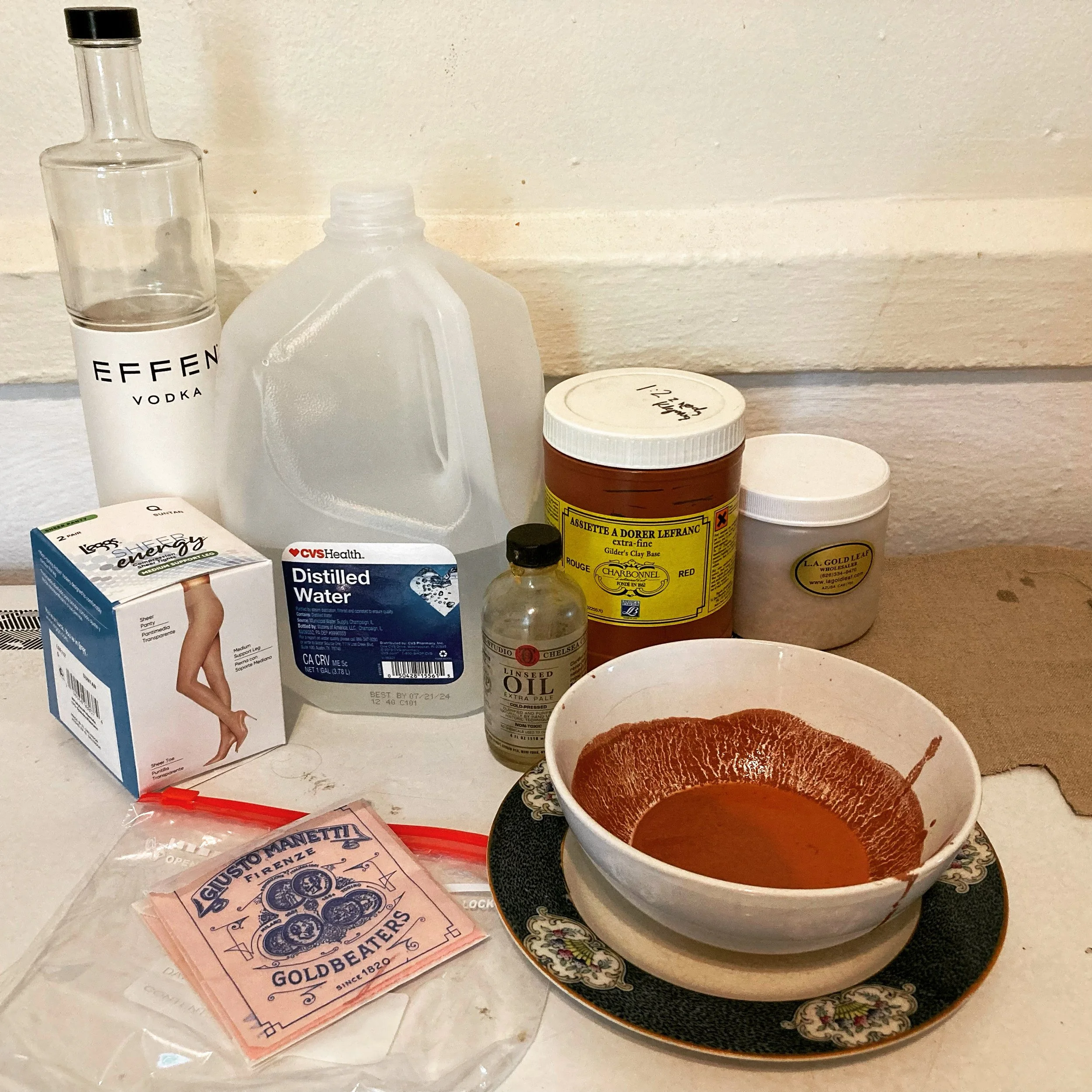
All the water gilding supplies!
And here is a video of the effect of burnishing the gold with an agate stone burnisher on the base of the triptych.
Meanwhile, I was also processing Lapis Lazuli stone to make pure Fra Angelico blue pigment for the painting!
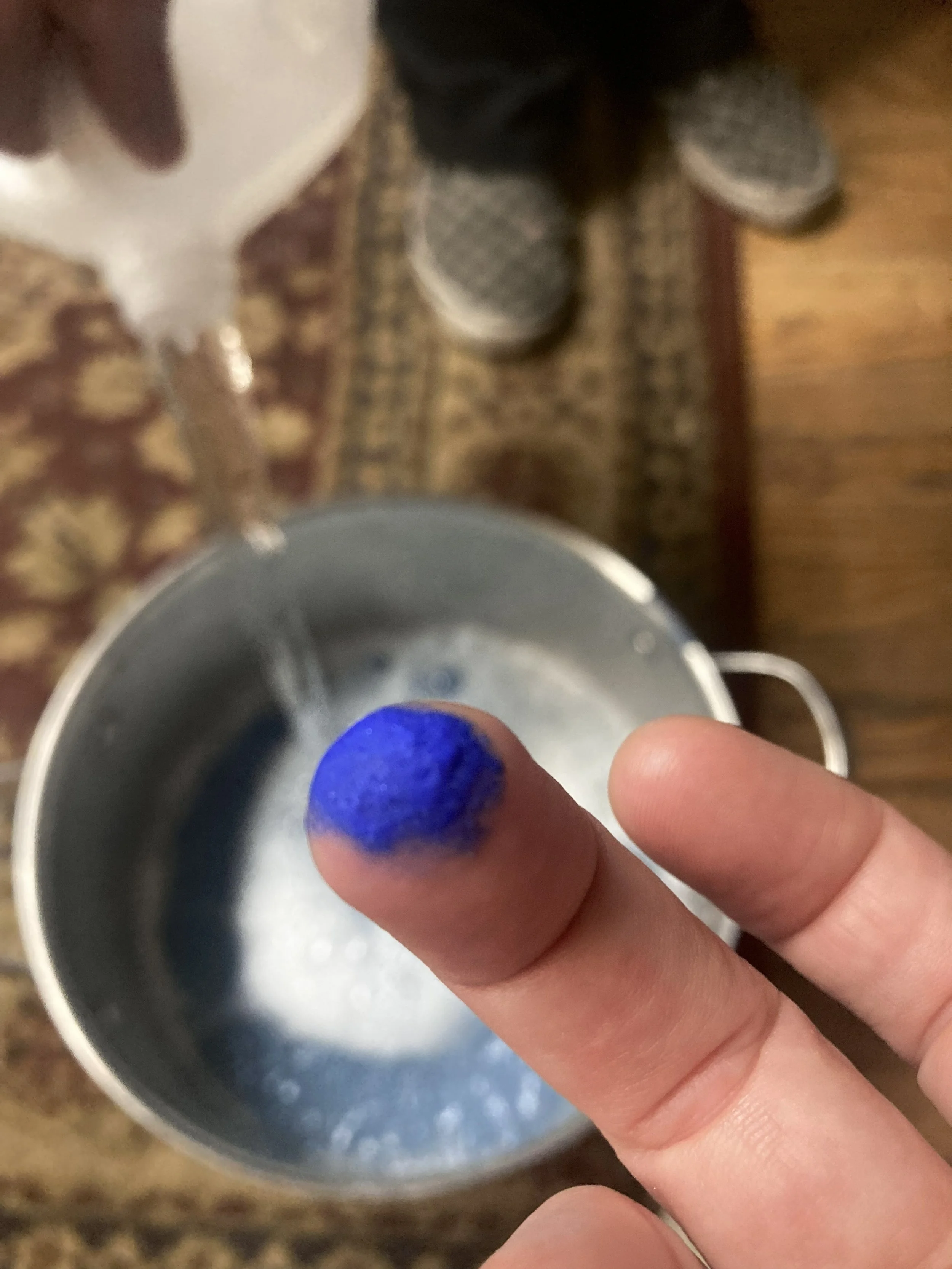
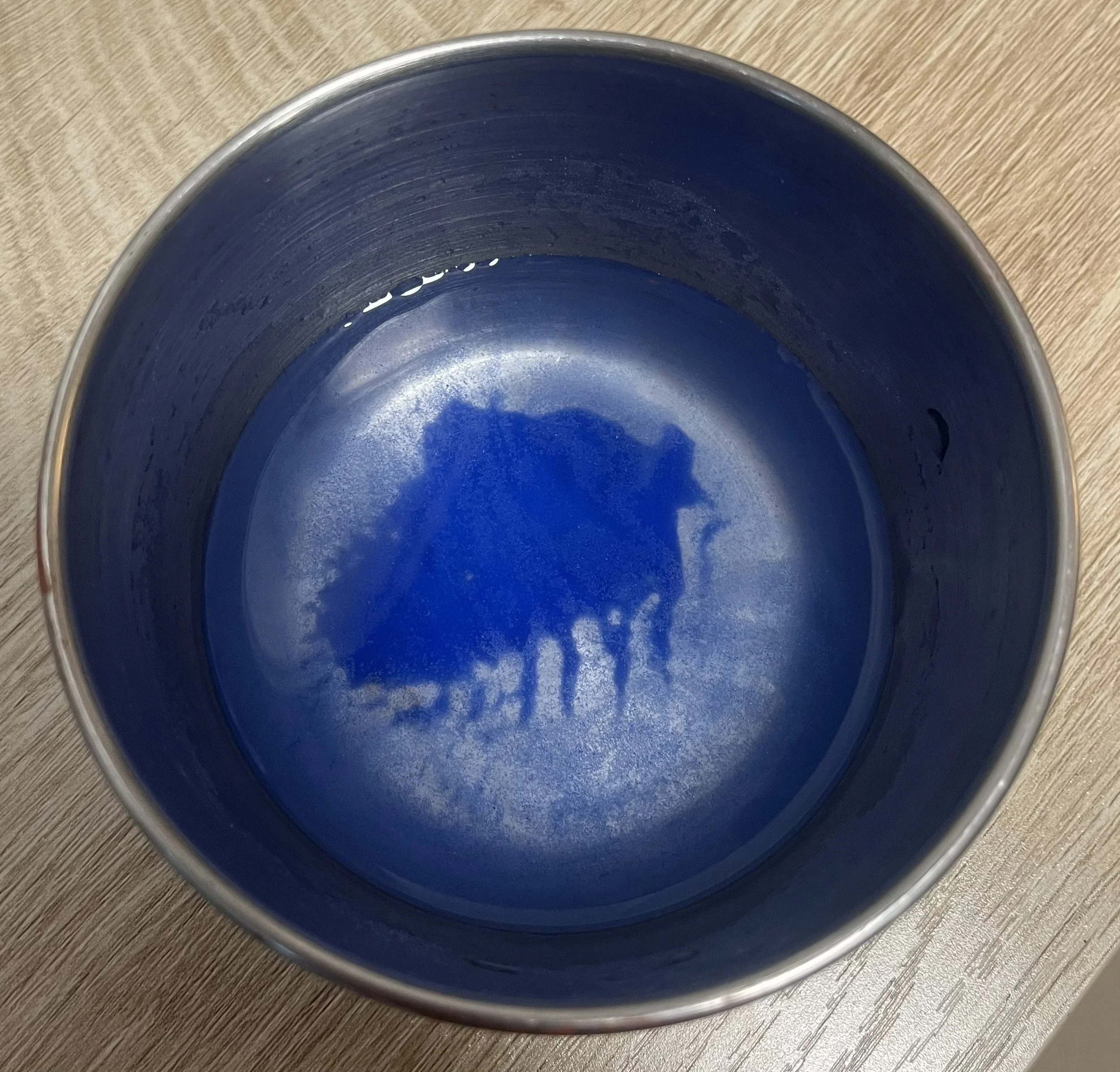
The finished purified Fra Angelico blue that resulted from the laborious process of refinement of the stone. The Chicago artist Kevin Stuart led and sponsored this project. I had always wanted to learn how to make my own lapis pigment!
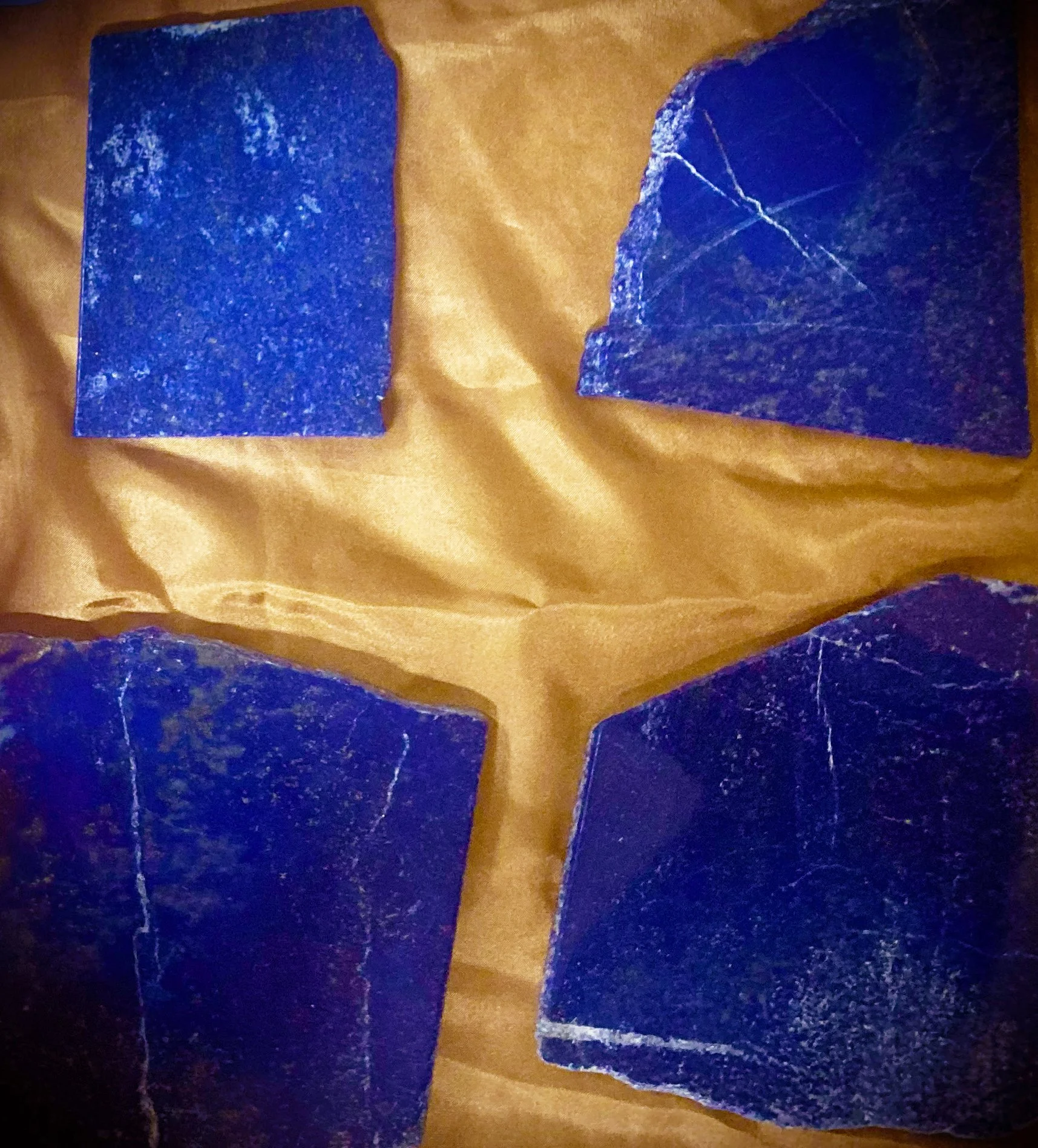
We began with raw Lapis slabs that Kevin used a rock crusher to crush into small enough pieces that they could be ground by hand using a mortar and pestle.
After being ground into small enough particles the lapis dust is combined with warm beeswax, pine resin, and gum mastic and kneaded into a dough that is then messaged in warm water with pot ash. This process causes the impurities to remain in the dough while the pure blue pigment precipitates out into the water.
And finally, the resulting Fra Angelico blue pigment being washed one last time before being made into paint.